Webinar 1 · 12 June 2026 · On demand

Plan Patient Interviews to Strengthen Trial Data Readiness

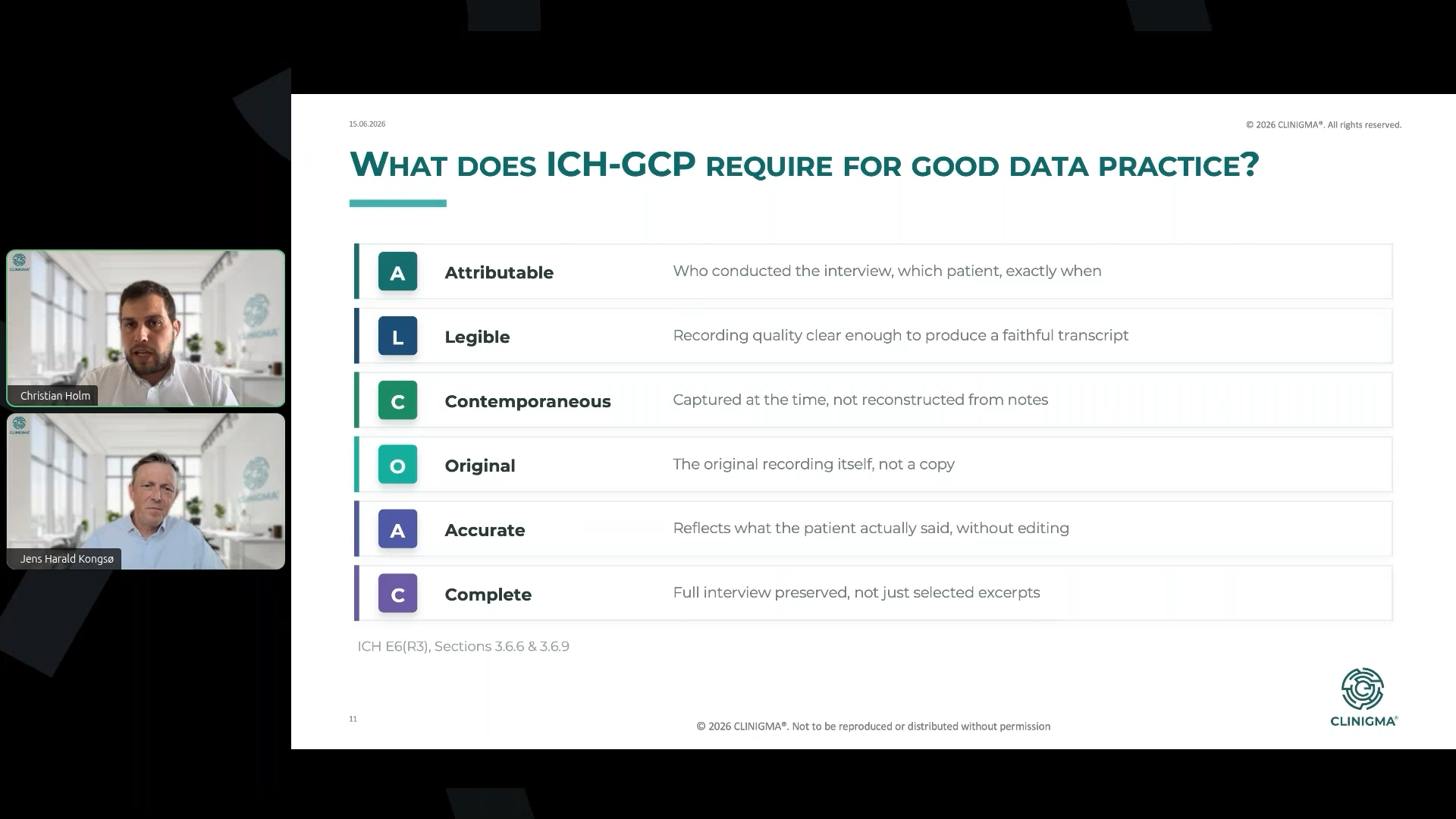
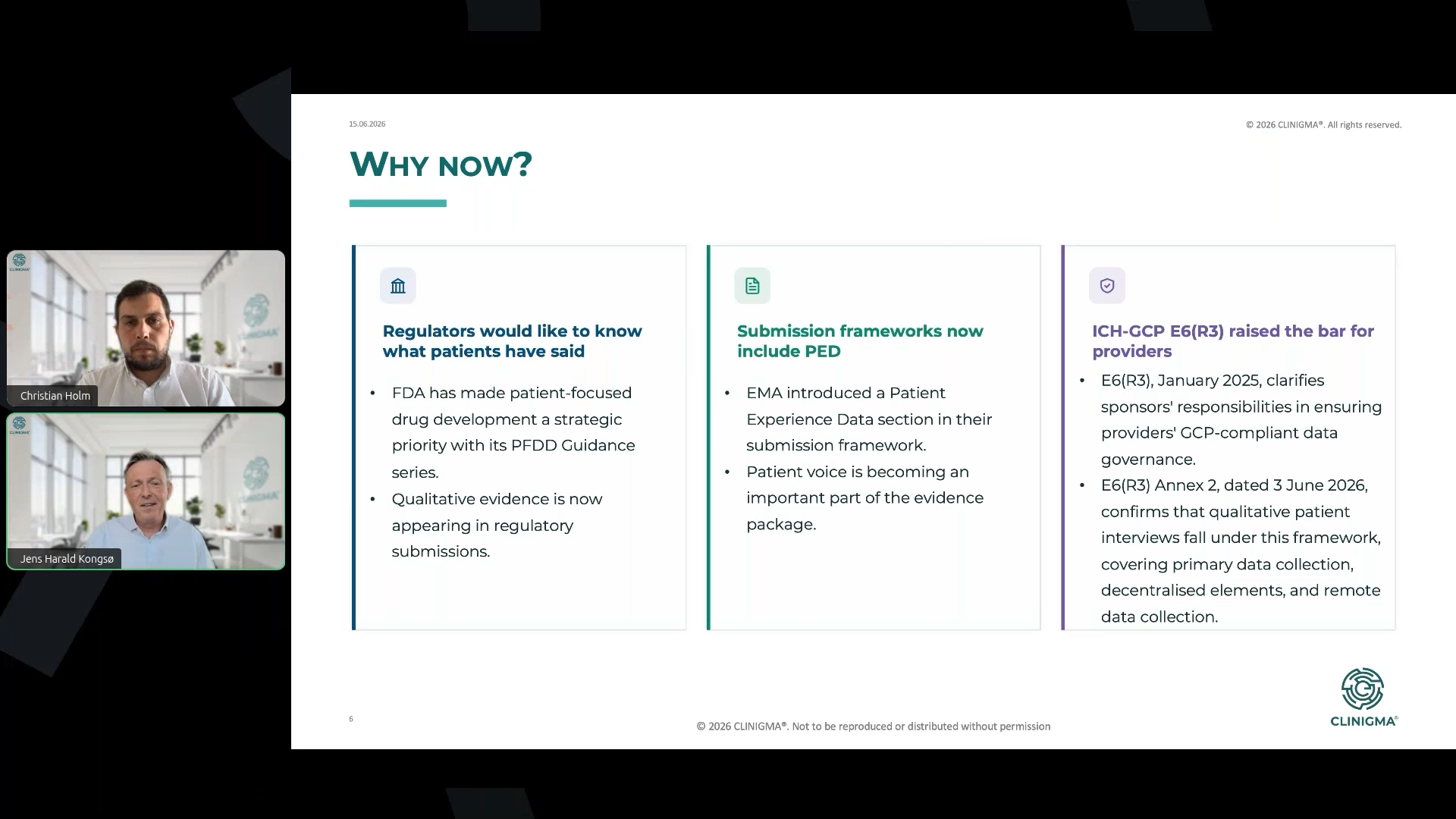
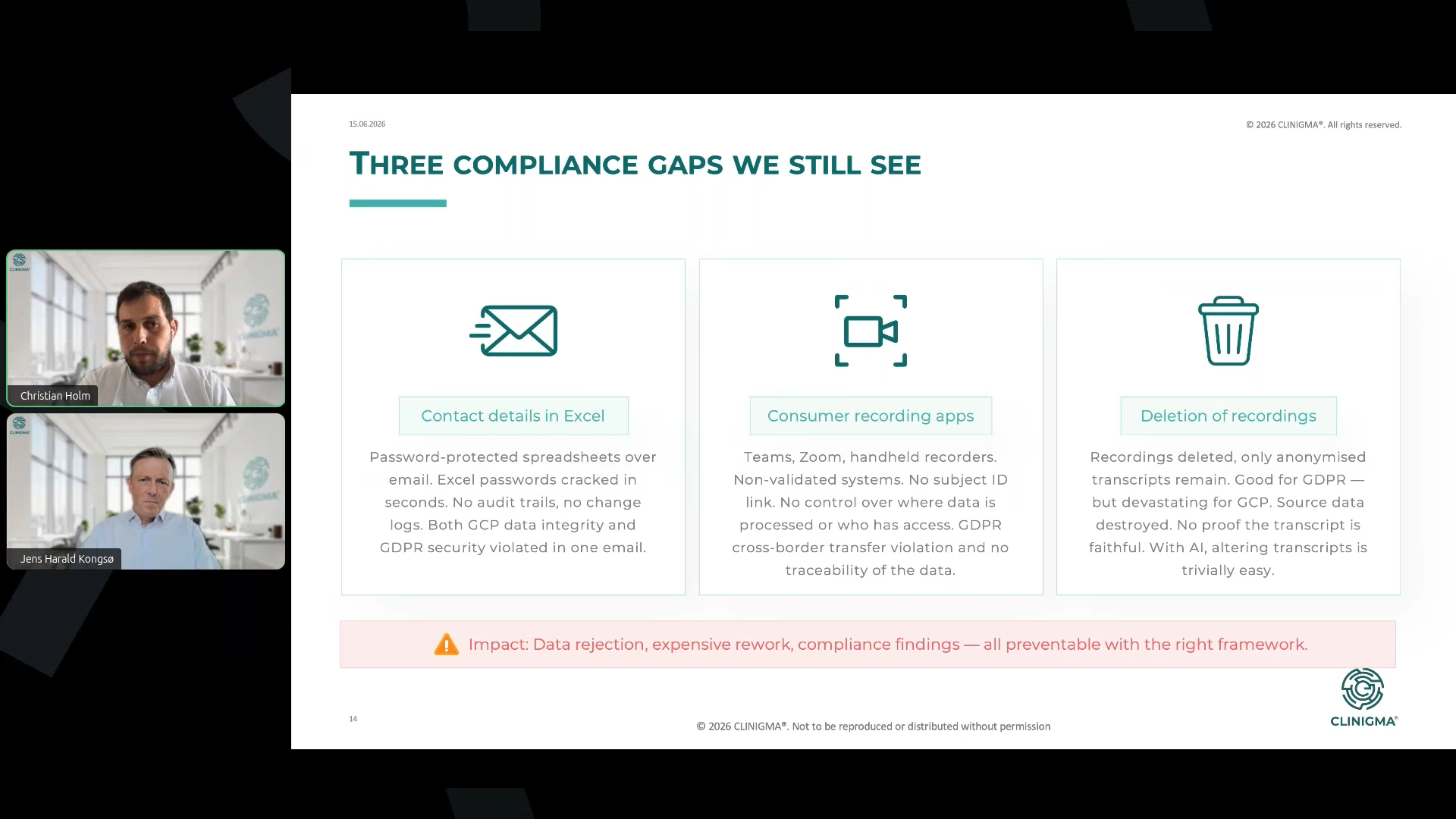
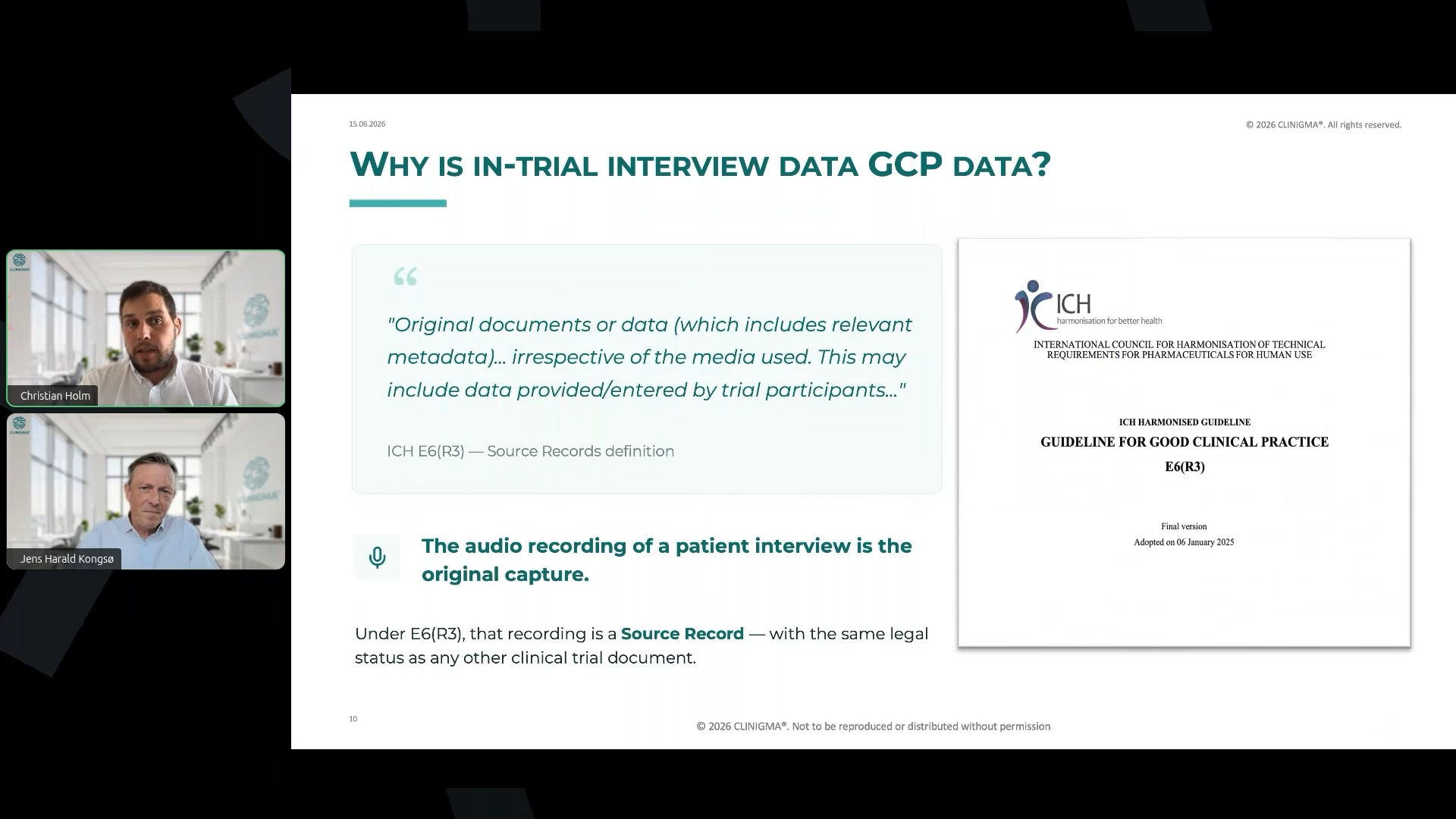
In our first Xtalks webinar, CLINIGMA's CEO, Jens Harald Kongsø, and CTO, Christian Holm, walked through the planning of an in-trial patient interview project: why these interviews count as ICH-GCP source data, where projects most often fall short, and the requirements to set for your interview provider. Watch the full session on Xtalks, or use the short clips below to go straight to a specific topic.

See the full series →
Register on Xtalks to access the full recording. Opens in a new tab.
TOPIC VIDEOS

Jump straight to a topic

Four short clips from the session. Pick a question and click to open.
QUESTIONS FROM THE AUDIENCE

Answers from the session

A written Q&A from the questions raised during the live webinar.

A provider says they're GCP compliant. What evidence should you actually ask to see?

Don't accept the claim at face value. Ask them to demonstrate understanding across every step of the interview lifecycle, through a structured approach rather than a general proposal. A request for proposal is the right tool here, because it forces a detailed explanation of how they plan to do the work, not just an assurance that they will. Your audit teams also need to assess the provider. And qualifying a vendor for one part of a clinical trial doesn't mean they know how to run in-trial patient interviews. CLINIGMA's RFP template sets out exactly what to require and what evidence to ask for.

What's the single biggest red flag in a provider's setup?

It's easy for a provider to say they have a system that can do the job. It might even be a validated system, such as an EDC used to capture trial data. But validated doesn't mean fit for purpose: a system can pass a paper-based validation exercise and still not be suitable for conducting and processing patient interviews. Ask what the system was validated for. A general-purpose meeting tool like Teams or Zoom may be described as validated, yet still not support the requirements that matter here, such as controlling where interview data is processed and stored. If your trial requires data processing within a specific region, a tool that cannot guarantee that is not fit for purpose, whatever its validation status. One thing is to claim it. Another is to show it.

Many CROs and consultancies now offer interviews as an add-on. How do you tell a specialist from a generalist?

A specialist has a much easier time staying aware of the pitfalls, particularly around local data-privacy regulations and how they're interpreted in individual countries, Italy being a good example. For a specialist, this is the core business. For a large CRO offering interviews as one service among many, it rarely gets that level of attention.

WEBINAR
02
COMING NEXT
September 2026

A Sponsor’s Guide to Conducting In-Trial Patient Interviews

Webinar 2 is coming in September. We will go deeper into the operational side of running in-trial patient interviews from the sponsor’s perspective. Details to follow.

See the full series